
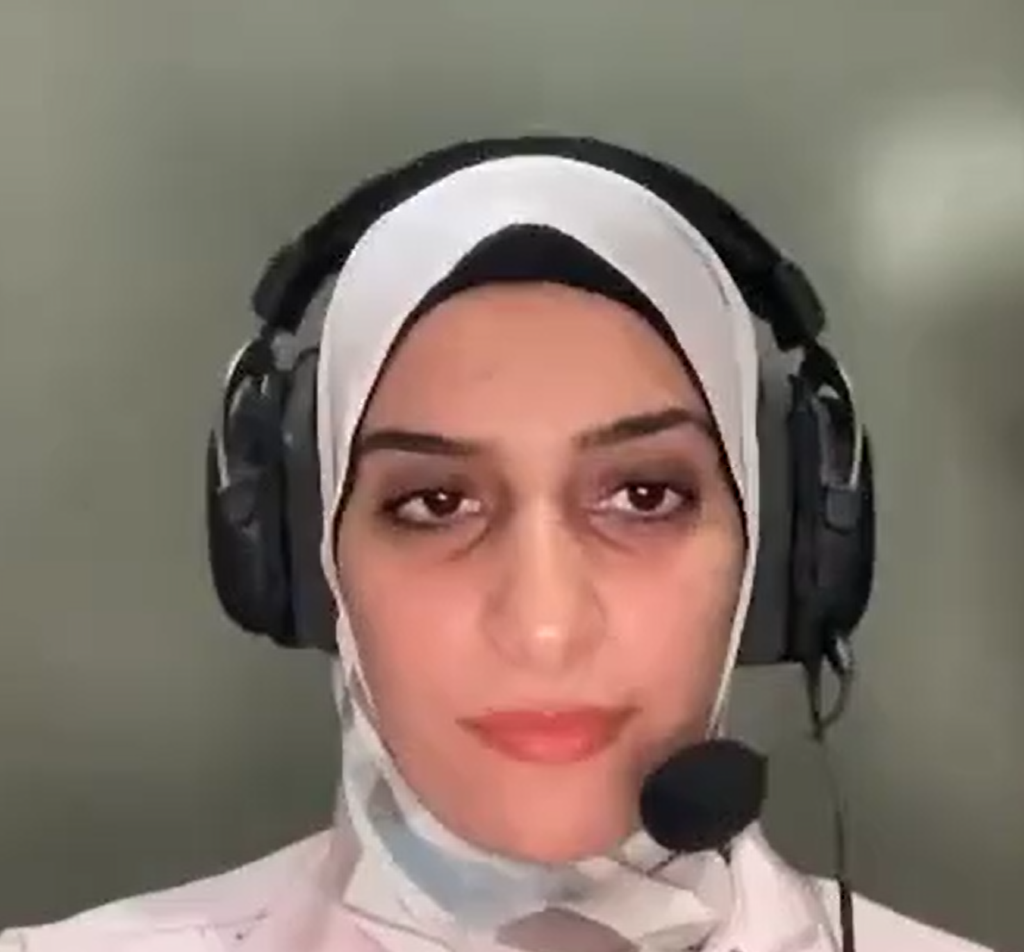
The latest episode of PalCast, “Finding a New Path Through the Genocide,” features Malak Abu Krayem, a Palestinian computer scientist, app developer, and children’s book writer from Gaza. Speaking with hosts Yousef and Tony, Malak shared how the genocide had disrupted the career she had planned and forced her to find new ways to build a future. Despite displacement, starvation, and the destruction surrounding her, she continued developing apps and creating art, working both within Gaza and remotely with people abroad. Her experience highlighted the determination of Palestinians in Gaza to keep learning, creating, and finding opportunities despite the conditions they faced.
Malak described the daily challenges of working in Gaza, where unreliable internet and electricity made even basic tasks difficult. Batteries cost more than $3,000, while electricity prices had risen to at least ten times their normal rate. A week-long internet outage caused considerable stress, but her Taiwanese employer responded with understanding, demonstrating the importance of empathy and flexibility when working with people in crisis. Malak also discussed Snaptek, an app she co-founded with a partner in Taiwan to organise notes, links, and expenses. Inspired by her own search for scholarship opportunities, she developed the app using AI while drawing on her technical knowledge. Because she could not verify accounts or purchase apps from Gaza, her partner helped launch the iOS version, with an Android version planned.

The conversation also explored the personal cost of the genocide and Malak’s determination to continue her education. She lost her home on January 24 and spent her 22nd birthday in a tent, without her belongings and exposed to the cold. She recalled the inhumane conditions of displacement and the painful experience of celebrating her first good meal after starvation, fish and fries. Despite these hardships, she received an unconditional offer to study for a master’s degree in artificial intelligence and computer science at Goldsmiths, University of London. However, attending depended on securing a scholarship and finding a safe route out of Gaza. She was exploring opportunities for Palestinian refugees in the UK, although it remained unclear whether people in Gaza were eligible. Malak also spoke about the potential for information technology to improve education, healthcare, and mental health services in Gaza, advising students to keep developing their skills and use AI as an assistant rather than a replacement for their own knowledge.
Beyond app development, Malak had created a colouring book to introduce children to Palestinian culture and traditions. Through this work, she hoped to show that Gaza was home to talented people with much more to offer than the suffering portrayed in the news. Her message was one of perseverance and opportunity, stressing that Palestinians in Gaza deserved the chance to develop their abilities and pursue their ambitions. Listen to the full episode on Apple Podcasts and Spotify to hear Malak’s story in her own words, and share the episode with others to help bring attention to the experiences and work of Palestinians in Gaza.